In today’s world of constant pressure and overstimulation, nervous system healing is about helping your body come down from survival mode and return to balance. It’s the foundation of somatic therapy – the process that teaches your body how to regulate instead of react.
By Cheryl Groskopf, LMFT, LPCC – Anxiety, Trauma & Somatic Therapist in Los Angeles
Last updated October 2025 • Clinically reviewed by Cheryl Groskopf, LMFT, LPCC
Nervous system healing is your body relearning safety after long stretches of stress. When the internal alarm stays on, you can’t think it off. Somatic therapy teaches gentle cues – awareness, breath, small movement – so your system starts trusting the moment again and settles on its own.
Key points
If you want a deeper peek at how this works in session, here’s how somatic work actually teaches safety: practical, real-world, not performative calm. For a quick primer on the physiology, see this basic science on the stress response by the National Institute of Mental Health
If you’ve ever told yourself to “just relax” and nothing happened, you’ve already met your nervous system’s loyalty to survival. Its job is to keep you alive, not calm. When it senses danger, real or remembered, it prepares for action: muscles tighten, breath shortens, heart rate spikes. That reaction can get stuck when stress becomes a lifestyle instead of a moment.
The reason you can’t think your way out of anxiety is that regulation isn’t a mindset, it’s a body skill. Research from UCLA Health on chronic stress shows how long-term tension keeps the body in alert mode even when life feels calm. Your nervous system learned to stay alert because, at some point, that kept you safe. Nervous system healing is the process of teaching it that the danger has passed. Through somatic therapy, we start tracking what your body actually does under stress – how your shoulders rise when you feel cornered or how your breath disappears during conflict – and we use those clues to re-educate the system.
In a place like Los Angeles, where overstimulation is constant – traffic, phones, pressure to keep up – your body rarely gets the signal that it’s safe to rest. Somatic work gives it that proof. Each session is a small rehearsal for calm that your nervous system eventually performs on its own.
Answer takeaway:
Your body doesn’t calm down because it’s disobedient…it’s protective. Healing happens when it finally realizes it doesn’t have to be on guard all the time.
A dysregulated nervous system stays in stress mode long after the threat is gone. Healing it isn’t about “relaxing harder” – it’s about helping the body trust that slowing down is safe. Somatic therapy does this by noticing protective reactions and teaching the body new cues of safety through awareness and movement.
Most people try to calm down the same way they do everything else – by working at it. Deep breaths, affirmations, distraction. But when your body is running on survival mode, calm can feel like danger. If your system spent years on alert, stillness might actually trigger more anxiety.
Healing a dysregulated nervous system means helping your body shift out of that loop gently, not by control. In somatic therapy, you learn how to guide your body instead of fight it – to notice the small signs of tension and teach it new rhythms.
Dysregulation just means your nervous system is out of balance. It’s when your body’s stress response turns on too strong or doesn’t turn off when it should. You might feel anxious, shut down, scattered, or disconnected – all versions of your system trying to manage too much at once. Regulation is the opposite: it’s when your body can respond to stress, then come back to baseline
Awareness is the first step of regulation. When you can feel what’s happening in your body as it happens, you give the nervous system the information it needs to adjust.
Awareness is the nervous system’s native language. Before breathwork or grounding tools, you learn to notice what’s already there – tight jaw, shallow breath, tingling hands. Those are signals that your body’s preparing for something.
Once you catch those cues, you can respond before they spiral. That small pause between reaction and choice is where regulation starts.
Forcing yourself to try to be calm tells the body to shut up instead of feel safe. True regulation happens when the body senses support, not when it’s commanded to relax.
When you tell your body to relax before it feels safe, it braces instead. Muscles tighten, thoughts race harder, emotions flood. You’re trying to turn off an alarm that hasn’t been reset.
The nervous system only turns down when it senses safety (and safety is a signal, not a thought).
That’s why somatic therapy works through cues: slower breath that isn’t forced, noticing the ground under your feet, orienting to your surroundings. Each small cue tells your midbrain, You’re safe enough now.
This is regulation practice. Nothing fancy…just teaching your body that stillness doesn’t mean danger anymore.
The nervous system learns through repetition. Each time you feel safe and stay present, you’re rewriting your body’s memory of threat. Every moment of safety adds a data point your brain and body remember. Over time, those micro-proofs stack up until your baseline shifts.
When trauma has kept the body in defense mode for years, this process can take time. You can learn more about working through trauma stored in the body and how that connects to nervous-system repair.
If you ever feel “frozen” rather than anxious, this guide on functional freeze and how to get unstuck walks through what’s happening inside your system when it can’t move forward.
Regulation doesn’t mean nothing bad ever happens again. It means your body knows how to come back to itself.
When your nervous system senses threat – real or remembered – it moves fast. Before you even think, your body chooses a survival response: fight, flight, freeze, or fawn. None of these mean you’re overreacting. They’re protective reflexes your system learned early on to keep you safe.
This isn’t always about anger. It’s the part of your system that moves toward the problem — trying to take control, argue, defend, or power through. Underneath it is usually fear and a deep need to feel safe again.
Flight energy looks like restlessness or the urge to do something now. You might clean, work, over-schedule, or think your way out of feelings. It’s your body’s way of staying one step ahead of discomfort.
Freeze is what happens when fight or flight no longer feel possible. You might shut down, space out, feel tired, or go numb. It’s your body’s version of hitting pause until things feel safer.
Fawning means you focus on others to stay safe — appeasing, fixing, or caretaking to keep connection. It’s a learned survival strategy that once worked but can leave you disconnected from your own needs.
Somatic therapy helps you notice which of these responses your body defaults to and teaches you how to move through them instead of staying stuck there. Over time, you build capacity — the ability to feel stress without being hijacked by it.

Somatic therapy helps your nervous system relearn safety by working directly with body sensations and protective patterns. Through awareness, movement, and breath, your body begins to recognize that the danger is over and can relax on its own.
Your body can’t heal through just theory alone. It heals through experience. Somatic therapy gives it that experience in real time. While talk therapy focuses on the story, somatic work focuses on what’s happening underneath it: the breath you hold, the posture that tightens, the small movements that reveal what your body still believes about safety.
In session, we slow things down enough to notice what your system is already trying to do. Maybe your shoulders tense every time you describe conflict. Maybe your breath shortens when you talk about being seen. Those patterns aren’t random (they’re protection strategies that once kept you safe). The goal isn’t to get rid of them but to help your body realize it doesn’t need them in the same way anymore.
Having a regulated nervous system feels like your body trusting itself again – steady breath, full movement, connection without tension. In somatic therapy, these body cues show that your nervous system is finding balance.
Most people confuse feeling calm with safety. Calm is quiet. Safety is trust. Safety feels like being able to breathe fully, move freely, and stay connected while you do it.
In somatic therapy, safety shows up in small shifts: a slower heart rate when you talk about something painful, warmth in your chest after feeling numb for years, being able to cry without shutting down. Those are signs your nervous system is remembering how to regulate itself.
Every time your body finds one of those moments on its own, it’s rewriting the memory of threat. That’s what regulation actually means – your system can rise and fall again instead of getting stuck on one setting.
Talk therapy reaches the thinking brain, while somatic therapy reaches the survival brain. By completing the body’s protective responses, it restores regulation instead of just insight.
Words reach the part of the brain that makes sense of things. Trauma lives in the part that keeps you alive.
When you only talk about what happened, your mind might understand it’s over, but your body doesn’t. That’s why insight alone rarely changes the physical symptoms – the racing heart, the shutdown, the panic that appears out of nowhere.
Somatic therapy totally bridges that gap. It helps the body process what words can’t. We use awareness, gentle movement, and breath to let those survival responses finish instead of suppressing them. When the body completes what it started, the nervous system naturally rebalances.
You don’t have to convince yourself you’re safe anymore because your body will feel it.
Why This Matters:
When your system learns safety instead of silence, you gain more than calm. You gain energy, focus, curiosity…the things the body puts on hold when it’s surviving.
That’s how somatic therapy changes your baseline: not by numbing sensations but by teaching your body that it’s strong enough to feel them.
Healing deep patterns can take time. If you’re working through long-term survival responses, therapy for complex PTSD in Los Angeles explains how body-based work helps integrate those experiences safely.
For additional resources, you can read this guide on somatic therapy and nervous-system dysregulation for a deeper dive into how the body resets from chronic stress.

The vagus nerve is the body’s built-in regulation system. It connects your brain to your organs and decides how quickly you move between stress and calm. Somatic therapy activates this pathway through breath, movement, and awareness so your body can reset without effort.
Your nervous system is basically a communication network: brain, body, and everything in between. The vagus nerve is the main messenger. It runs from your brainstem through your chest and into your gut, constantly scanning for safety. When it senses threat, it speeds up your heart, tightens your muscles, and diverts energy to survival. When it senses safety, it slows everything down.
Most people’s vagus nerve stops getting accurate information because life rarely slows enough for the “safe” signal to register. Somatic therapy gives your body direct experiences of safety, one cue at a time.
Talk therapy reaches the thinking brain, while somatic therapy reaches the survival brain. By completing the body’s protective responses, it restores regulation instead of just insight.
The vagus nerve links body sensations and emotional states. When you slow your breath or notice support under your body, you’re sending real-time safety data up the vagus nerve to your brain.
Think of the vagus nerve as a two-way street. It carries information from your body to your brain 80 percent of the time, and from your brain down only 20 percent. That means what your body does matters more than what you think.
In somatic therapy, we use that design intentionally. Grounding, orienting, and mindful breathing all send physical messages of safety. Over time, those signals strengthen the vagal “tone” – basically how flexible your system is between activation and rest. Strong vagal tone means faster recovery after stress.
The sympathetic system gears you up for action, while the parasympathetic system brings you back down. Somatic work strengthens the body’s ability to move between the two smoothly instead of getting stuck on high alert.
Your autonomic nervous system has two main branches. The sympathetic side handles fight-or-flight. The parasympathetic side, led by the vagus nerve, handles recovery.
Most of us live with the gas pedal pressed and the brakes worn out. That’s why you can feel tired and wired at the same time.
Somatic therapy doesn’t force rest – it retrains flexibility. Through gentle body cues, your system relearns how to accelerate and decelerate as needed. The result isn’t sedation; it’s balance. You can handle stress and still return to neutral afterward.
Your body doesn’t need you to calm down. It needs proof that it’s safe enough to.
Consistent somatic practice strengthens vagal tone and widens your body’s “window of tolerance.” The wider that window, the easier it is to handle stress without tipping into shutdown or panic.
Long-term nervous system healing isn’t about perfect regulation – it’s about capacity. The more often you practice small regulation moments, the more responsive your vagus nerve becomes.
Your body learns, Stress isn’t a problem! It’s something I know how to recover from. That’s the foundation of resilience – not avoiding discomfort but moving through it with your body on your side.
To understand how mind and body interact during this process, you can read about the science behind holistic therapy and the mind-body connection.
For more detail on this topic, explore Polyvagal Theory Explained – a deeper dive into how safety cues and the vagus nerve shape emotional regulation.
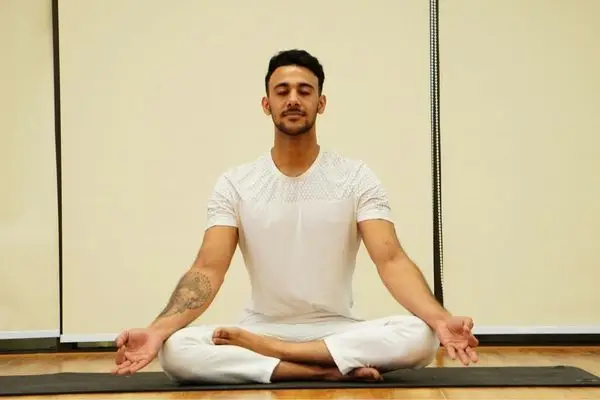
Somatic practices are simple, body-based tools that teach your nervous system safety through repetition. When used consistently, they retrain your body to come down from stress faster and return to balance more easily.
You don’t need an hour of meditation or a perfect morning routine to start healing your nervous system. Regulation happens in small, ordinary moments (like noticing your breath while you wash dishes, letting your shoulders drop between emails, grounding your feet before a difficult call).
Somatic therapy teaches you to use those everyday moments as mini-training sessions for your body. Each one reminds your system, you’re safe now.
These practices don’t replace therapy, but they strengthen what we do in session. Think of them as your nervous system’s “homework” – low effort, high impact.
Movement helps discharge leftover activation so your body doesn’t stay stuck in fight-or-flight. Even small, mindful shifts can reset your system faster than trying to sit still.
When your body feels trapped, motion is medicine. It doesn’t need to be a workout! A slow walk, shaking out your hands, or stretching your neck can send a clear signal that the threat is over.
Grounding adds the other half of that message: stillness that feels supported, not frozen. Standing with your feet flat on the floor and feeling gravity pull you down gives your system the cue, I’m safe enough to be here.
Combining gentle movement with grounding helps your body move energy out and safety in.
Slow, unforced breathing activates the vagus nerve, while interoception, which is sensing what’s happening inside your body, helps you catch stress signals earlier and recover faster.
Most of us breathe like we live: rushed and shallow. The exhale is where regulation starts. When you extend your exhale just a bit longer than your inhale, your vagus nerve interprets it as a sign of safety.
Interoception builds on that by training awareness of subtle body cues: heartbeat, warmth, tension, flutter in the stomach. These sensations are how your nervous system “talks.” Listening instead of overriding them helps your body adjust before stress snowballs.
You don’t have to analyze… just notice. That noticing alone changes your physiology.
Safety isn’t a place, it’s a pattern. The more often you show your body safety in short, real-world moments, the faster your nervous system learns it.
You can’t live in a bubble of zen, but you can train your body to recover quickly. That’s the point of nervous system healing – not to avoid stress, but to widen your capacity for it.
Try noticing a cue of safety once every few hours: the warmth of a mug, your dog breathing nearby, the weight of your feet. Each one is a micro-reminder to your body that the moment is safe.
Over time, your system starts doing this automatically. You don’t have to “try to regulate” – your body just knows how.
Each practice tells your nervous system: “The moment is safe enough to rest.”
You can also explore my approach to somatic therapy in Los Angeles to see how these everyday practices fit into body-based therapy sessions.
Sometimes the biggest progress is when nothing feels dramatic. Just steady, warm, and okay in your own skin.
You know your nervous system is healing when your body can handle stress without getting stuck in fight, flight, or freeze. Somatic therapy helps these changes stick by strengthening the body’s ability to move between activation and rest naturally.
Healing isn’t a light-switch moment. It’s a series of tiny physiological updates your body starts making once it feels safe enough. The more proof your nervous system gets that it can recover after stress, the faster those circuits rewire.
Somatic therapy supports that process by teaching the body through experience instead of theory. You begin to notice patterns that used to feel automatic, and your system starts finding its own way back to balance.
Emotional regulation shows up as space between stimulus and reaction.You still feel, but you’re not flooded in emotion.
A healing nervous system feels steadier: easier breath, warmer hands, deeper rest, better digestion.
How you’re feeling physically is usually the first hint that something’s shifting. Sleep evens out. The tightness in your jaw or stomach starts loosening on its own. Your breath feels fuller without having to control it.
These aren’t random improvements…they’re signals that your vagus nerve and parasympathetic system are doing their job again. Your body is no longer scanning for threat every single second.
When safety becomes familiar, connection gets easier. You stop people-pleasing for approval and start relating from authenticity.
As your nervous system stabilizes, relationships start feeling different. You can stay present during conflict without shutting down or over-explaining. Eye contact feels natural again. Intimacy doesn’t drain you.
This is how nervous system healing translates into daily life – it changes the body cues that drive old attachment patterns.
Each session adds another proof point for your body: “I can handle activation and return to rest.” Over weeks, that becomes muscle memory.
That’s why healing feels more natural over time. You’re not “doing techniques” anymore. Your body simply knows what safe feels like and goes there on its own.
Your brain will start linking those moments together until they become your default pattern.
For more on how inner parts and body states interact, see my approach to IFS therapy in Los Angeles. It explains how parts work supports body regulation.

In a fast-paced city like Los Angeles, your nervous system rarely gets a break. Somatic therapy helps you regulate from the inside out, so you can stay grounded even when life doesn’t slow down.
Living in Los Angeles can make even regulated people feel overstimulated. Between traffic, noise, constant movement, and social pressure to stay “on,” your nervous system starts thinking urgency is normal.
That’s not a personal flaw, it’s literally physiology. Your body adapts to its environment. But without recovery time, it eventually forgets what calm feels like.
Somatic therapy is where that recovery begins. It helps you build body awareness in real conditions – not on a mountaintop, but in daily LA life. You learn how to recognize when your system is overactivated and how to guide it back down before burnout takes over your body.
Chronic stimulation keeps your nervous system in a loop of micro-activation. Without downtime, stress chemicals never fully clear, which makes rest feel unreachable.
The city runs on speed: quick decisions, long commutes, and endless notifications. Your brain adapts, but your body pays for it. Constant low-grade activation keeps adrenaline trickling, digestion on pause, and sleep shallow.
That’s why you can feel tired and wired at the same time. It’s not just stress: it’s your nervous system trying to keep up.
Somatic therapy trains your body to tolerate stimulation without slipping into fight, flight, or freeze. It builds the flexibility to meet stress without burnout.
Instead of aiming for complete calmness (which is unrealistic), we focus on flexibility: how quickly your body can return to baseline. In sessions, you practice finding micro-moments of safety right inside stress.
That might mean grounding your feet before a meeting, noticing breath during a traffic jam, or feeling support in your back while scrolling news that spikes your heart rate. These moments teach your system that it can handle intensity without shutting down.
You’ll still have deadlines and noise, but your body won’t treat them like danger. Over time, you’ll move through stress instead of marinating in it.
Clients often describe subtle but huge changes, i.e. less road rage, deeper sleep, energy that lasts through the day. They stop needing to recover from life because their nervous system starts recovering in real time.
That’s the core of nervous system healing… your body knowing how to self-adjust, even in a city that never really pauses.
That’s a small somatic reset your nervous system can do anywhere in LA.
When you’re ready to build more flexibility with stress, you can explore therapy for anxiety in Los Angeles. It shows how anxiety work overlaps with nervous system regulation.

Somatic therapy works by involving the body directly in the healing process. Instead of talking about your experiences, you notice what your body does as you talk.
The body’s sensations, like tightening, holding, or freezing, show where your system is still on guard. Through gentle awareness and movement, you help those reactions complete. That’s how somatic therapy supports nervous system regulation. It re-teaches your body what safe feels like from the inside out.
It depends on how long your system has been running on survival energy. Some people notice small shifts after a few sessions of somatic therapy, while others take several months to feel steady.
Your nervous system learns through experience, not speed. Every repetition of safety, each exhale, each moment you don’t override your body, rewires the pathway a little more.
Healing isn’t linear, but the changes are measurable: better sleep, steadier moods, fewer crashes after stress.
Trauma keeps the body in long-term defense mode. Even after life becomes safe, the nervous system still acts like it’s not.
That’s why you might feel constantly “on,” struggle to rest, or freeze when overwhelmed. Somatic therapy helps your system realize those old responses are no longer needed.
The body can’t tell time, it learns safety through sensation, not logic. Working through those physical patterns is how nervous system healing from trauma actually happens.
Learn more about therapy for trauma stored in the body – a breakdown of how somatic work helps the body complete survival responses.
The vagus nerve loves slow, rhythmic movement and long exhales. Singing, humming, slow breathing, gentle stretching, or even laughing can all stimulate vagal tone.
In somatic therapy, we use those same cues intentionally (think breath, orientation, grounding) to remind your body that it can recover from activation.
Natural vagus-nerve regulation isn’t about supplements or gadgets…it’s about consistency. The more often your system experiences calm safely, the faster the vagus nerve learns to hold that pattern.
In cities like LA, the nervous system is constantly overstimulated. Traffic, noise, pressure, deadlines. Somatic practices are short, realistic ways to help your body come down from that overdrive.
Grounding, orienting, slow exhalations are small, portable resets for your nervous system. When you use them often, your body stops treating everyday stress like a threat. It’s not about escaping the city. It’s about training your system to handle it differently. That’s nervous system healing in Los Angeles: recovery that fits into real life.
If you’ve read this far, your body’s probably already doing what it’s meant to: slowing down a little, getting curious, noticing itself again. That’s the start of regulation.
In therapy, we build on that curiosity. Together, we notice what happens in your body when something’s hard to talk about. We let it move, breathe, and find safety at its own pace. It’s not about “fixing” you – it’s about helping your system remember what calm actually feels like.
If you’re in Los Angeles and want support, I offer sessions focused on nervous system healing, trauma recovery, and emotional regulation through somatic therapy. You don’t have to manage it alone.
The first few sessions are about noticing – what your body does under stress, what helps it relax, and what safety feels like in real time.
In our first session, we’ll start simple: tracking breath, posture, and small physical reactions as you talk. We move at the speed of your body, no pressure, no forcing. Just listening to the wisdom of your body, and letting your nervous system guide us.
Cheryl Groskopf, LMFT, LPCC, is a dual-licensed therapist specializing in anxiety, trauma, and body-based healing in Los Angeles.
I’m a licensed Marriage & Family Therapist and Professional Clinical Counselor who’s spent years studying how the nervous system responds to trauma. My approach blends somatic therapy, attachment work, and neuroscience so healing feels practical and human.
I’ve been featured in TIME, HuffPost, and Verywell Mind for translating complex emotional science into everyday language – the same approach I bring to every session.
My practice is based in Los Angeles and serves clients across the Westside, Culver City, and surrounding neighborhoods in-person and online.
Los Angeles isn’t exactly a calm city, which is why working with someone who understands that environment matters. Whether you’re decompressing after hours on the 405 or trying to slow down between film projects, somatic therapy helps your body find its own rhythm again.
About the Author
Cheryl Groskopf, LMFT, LPCC: Somatic & Trauma Therapist Los Angeles
Cheryl Groskopf is a dual-licensed therapist specializing in anxiety, trauma, and body-based approaches to healing. She helps high-functioning adults in Los Angeles regulate their nervous systems and reconnect with safety through somatic therapy, attachment work, and parts-based methods. Her work has been featured in Well + Good, Popsugar, HuffPost, and Bustle, and she’s the founder of Evolution to Healing Psychotherapy.
