Los Angeles Psychotherapist | Somatic, Attachment & Trauma Therapy
Specialized Treatment for
Anxiety| Attachment | Trauma
I’m Cheryl Groskopf, a Licensed Marriage and Family Therapist (LMFT), Licensed Professional Clinical Counselor (LPCC), and founder of Evolution to Healing in Los Angeles.
I work with adults navigating anxiety, childhood trauma, people-pleasing, perfectionism, and relationship patterns that can be incredibly hard to change, even when you understand where they come from.
My approach brings together somatic therapy in Los Angeles, attachment-focused work, and Internal Family Systems (IFS)-informed therapy. We explore how past experiences shape your current patterns, how your nervous system responds to stress, and what it takes to start changing those responses.
I’m also the author of The Somatic Healing Workbook, forthcoming from Blue Star Press and distributed by Penguin Random House. My professional insights have appeared in TIME, Vogue, Cosmopolitan, ABC News/Good Morning America, Verywell Mind, HuffPost, and other national media.













Licensure: California LMFT #122530 and LPCC #10096.
Experience: Psychology research and mental-health work dating back to 2006, including forensic psychology, community mental health, and private practice.
You’re smart. Insightful. Responsible. You know how to show up.
You’re probably the person everyone relies on. You get things done, anticipate what people need, and somehow always manage to hold everything together.
But you might also spend hours replaying conversations, feel guilty saying no, or constantly worry about disappointing someone. Even when you know you’re overthinking, it’s hard to stop.
I work with adults who have spent years putting pressure on themselves to get everything right, keep everyone happy, and avoid making mistakes. Many grew up feeling responsible for other people’s emotions or learned early that being easygoing, helpful, or successful kept things running smoothly.
These patterns can show up as anxiety, perfectionism, people-pleasing, and difficulty knowing what you actually want or need.
In our work together, we’ll explore where these patterns come from, what keeps them going, and how you can begin responding differently.

My practice focuses on adults navigating:
I’m an active, collaborative therapist. I’ll listen, but I’ll also ask questions, offer perspectives, and help you notice patterns you might not recognize on your own.
Maybe you know you don’t need everyone’s approval, but you still feel anxious when someone seems upset with you. Or you understand why you struggle with boundaries, yet saying no still brings up a ton of guilt.
We’ll explore what happens in those moments, including your thoughts, emotions, and physical responses. Sometimes that means slowing things down enough to notice what you’re feeling before automatically apologizing, explaining yourself, or trying to fix the situation.
I pay attention to the difference between understanding a pattern and being able to respond differently when it actually happens. You can know a boundary is reasonable and still feel overwhelmed with guilt when you try to set one. That reaction gives us something important to work with.
I want you to feel comfortable telling me when something isn’t working, when you disagree, or when you need to slow down. Therapy is collaborative, and your input matters.
I also want what we do together to be useful outside our sessions. We’ll connect what you’re learning to the situations and relationships you’re navigating in everyday life.
I take a holistic approach to therapy, looking at how your thoughts, emotions, nervous system, relationships, and past experiences influence one another.
I draw on different therapeutic approaches depending on what you’re experiencing and what we’re working toward.
You can understand why you’re anxious and still feel your heart racing, your stomach turning, or your body bracing for something to go wrong.
With somatic therapy, we pay attention to how stress shows up in your body, learn to recognize your nervous system’s responses, and practice ways to work with those responses in real time.
Different nervous-system states can respond differently to the same exercise. Something that helps when you’re restless and overwhelmed might feel like too much when you’re exhausted, numb, or shut down.
That’s why I pay attention to what your body is doing before choosing how to work with it.
Our early relationships can shape what we expect from other people, how comfortable we feel expressing our needs, and how we respond to conflict or closeness.
Through attachment-focused therapy, we explore patterns like people-pleasing, fear of rejection, difficulty trusting others, and feeling responsible for everyone else’s emotions.
We look at how those patterns developed and how they’re affecting your relationships today.
Maybe one part of you wants to speak up, while another is terrified of disappointing someone. Or part of you wants closeness, while another pulls away when relationships become more serious.
IFS-informed therapy gives us a way to understand these different parts, the experiences connected to them, and what they may be trying to protect.
We can explore those internal conflicts without automatically treating one part of you as the problem.
Trauma can affect how you see yourself, relate to other people, and respond to stress.
I offer trauma therapy, including work with adults experiencing complex PTSD following repeated or prolonged traumatic experiences.
We work at a pace that respects your capacity, with attention to emotional regulation, boundaries, and what’s affecting your life now.
You have a say in what we explore and how much detail you share about your past.
I also draw on Emotionally Focused Individual Therapy (EFIT) and polyvagal-informed perspectives when they’re relevant to our work.
Blue Star Press | Distributed by Penguin Random House
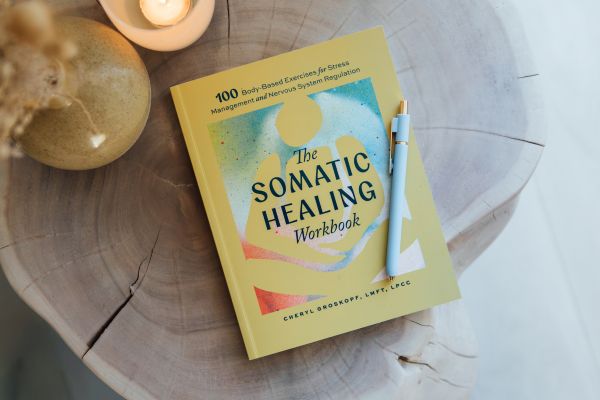
I’m the author of The Somatic Healing Workbook, a practical guide featuring 100 exercises organized around fight, flight, freeze, and fawn responses.
I wrote it because knowing you’re anxious, overwhelmed, or shutting down doesn’t always tell you what to do next.
Sometimes the practices people are told to use can even make them feel worse.
Ever tried deep breathing when you’re anxious, only to feel even more anxious? Or tried meditating when you’re shut down and found yourself feeling more disconnected?
Different nervous-system states can call for different kinds of support.
That’s why I organized the exercises by stress response. The goal is to help you recognize what you’re experiencing, better understand what may be happening in your nervous system, and find practices that make sense for that moment.
The exercises are designed to be short, accessible, and usable in everyday life.
This same attention to individual responses, body awareness, and choosing an appropriate approach informs my work with clients.
The Somatic Healing Workbook will be published November 3, 2026, by Blue Star Press and distributed by Penguin Random House.
The workbook received an endorsement from Dr. Heidi Riggio, Professor of Psychology Emeritus at California State University, Los Angeles.
Dr. Riggio, who has known me for nearly 20 years as a professor, research advisor, collaborator, and colleague, highlighted the book’s integration of psychological research, clinical knowledge, and practical approaches to the mind-body connection.
You can read her full endorsement on the Penguin Random House book page.
My professional background includes nearly 20 years of experience across psychology research, forensic settings, community mental health, and clinical training. I hold two graduate degrees from California State University, Los Angeles, and two professional licenses in California.
Master of Science in Clinical Psychology — 2010
California State University, Los Angeles
Master of Arts in Counseling — 2015
California State University, Los Angeles
My academic background provided training in psychological research, human behavior, clinical assessment, counseling, and understanding how emotional and behavioral patterns develop.
I hold two California professional licenses:
Licensed Marriage and Family Therapist (LMFT) — License #122530
Licensed Professional Clinical Counselor (LPCC) — License #10096
My professional background includes training in relational and family-system perspectives as well as individual clinical counseling.
Both licenses can be independently verified through the California Department of Consumer Affairs.
Before beginning my clinical career, I worked in academic research settings focused on forensic psychology, human memory, criminal thinking, and social behavior.
Research Assistant — California State University, Los Angeles | 2006–2009
Department of Psychology | Dr. Mitchell Eisen
I assisted with forensic psychology research examining false eyewitness memory reports. My responsibilities included conducting experimental sessions, collecting data, participating as an experimenter and confederate, reviewing academic literature, preparing annotated bibliographies, and giving research presentations.
Research Intern — Texas Tech University | Summer 2008
Correctional Psychology Lab | Dr. Robert Morgan
During a paid research internship in Lubbock, Texas, I worked on projects examining criminal thinking and recidivism.
I helped supervise the Criminal Thinking Project and conducted research interviews with incarcerated men across minimum-, maximum-, and psychiatric-security correctional settings in West Texas.
My work also included data collection, coding, and statistical analysis using SPSS.
Research Assistant — California State University, Los Angeles | 2007–2008
Department of Psychology | Dr. Kaveri Subrahmanyam
I assisted with research examining social networking, media, language, and human behavior.
My responsibilities included coordinating research lab meetings, preparing and editing grant proposals, collecting data through laboratory and field research, administering online surveys, and delivering research presentations.
Founder & Psychotherapist — Evolution to Healing
Los Angeles, California
Today, I work with adults experiencing anxiety, childhood trauma, complex PTSD, people-pleasing, perfectionism, and attachment-related difficulties.
My practice integrates somatic approaches, attachment-focused work, and IFS-informed perspectives to help clients explore how earlier experiences influence their current emotional patterns, relationships, and nervous-system responses.
Psychotherapist — Foresight Mental Health
At Foresight Mental Health, I provided psychotherapy for adults navigating anxiety, trauma, emotional difficulties, and relationship concerns.
This work contributed to the trauma-informed, collaborative approach I bring to my private practice.
Community Mental Health — Department of Mental Health Services
Throughout my clinical training and licensure experience, I worked with couples and families through Department of Mental Health services.
This is where my interest in attachment-focused therapy became especially important.
Working with couples and families gave me a deeper understanding of how emotional patterns develop within relationships, how people learn to respond to conflict or closeness, and how these patterns can continue into adulthood.
That experience became an important part of my transition toward attachment-focused and trauma-informed psychotherapy.
Case Assessment Intern — Twin Towers Correctional Facility | 2009–2010
Community Transition Unit | Los Angeles, California
I worked with the Community Transition Unit, helping individuals preparing to leave incarceration access community resources and support.
My responsibilities included coordinating with medical and mental health staff, government agencies, and community organizations to connect participants with housing, mental health services, substance-use rehabilitation, employment resources, and life-skills services.
This work gave me experience navigating complex mental-health and social-service needs within the correctional system.
My professional development has included training in evidence-based treatment approaches, trauma-informed care, assessment, and early intervention services.
Seeking Safety
A treatment model developed to address trauma-related difficulties and substance-use concerns, emphasizing coping skills and safety in the present.
Managing and Adapting Practice (MAP)
An evidence-informed framework for selecting, adapting, and evaluating treatment strategies using research-supported practices and individual clinical needs.
Trauma-Focused Cognitive Behavioral Therapy (TF-CBT)
A structured, evidence-based treatment approach developed primarily for children and adolescents experiencing trauma and their caregivers.
Interpersonal Psychotherapy (IPT)
An evidence-based therapeutic approach that focuses on interpersonal relationships, significant life changes, grief, and the connection between relationships and emotional well-being.
Child and Adolescent Needs and Strengths (CANS)
Training in a structured assessment framework used to identify the needs and strengths of children and adolescents, support clinical decision-making, and guide individualized service planning.
Prevention and Early Intervention (PEI)
Clinical training and experience associated with services designed to identify and address mental-health concerns early, with attention to prevention, early intervention, and access to appropriate support.
These trainings and experiences contributed to my clinical foundation before my work increasingly focused on trauma, attachment, somatic therapy, and nervous-system regulation.
Additional Professional Development
My continuing education has also included work in somatic approaches, attachment-focused therapy, Internal Family Systems (IFS)-informed practice, Emotionally Focused Individual Therapy (EFIT), and polyvagal-informed perspectives.
These approaches inform how I work with adults experiencing anxiety, trauma, attachment difficulties, and nervous-system dysregulation.
My background in psychology began in 2006, in forensic and correctional psychology. At the time, I was interested in understanding human behavior, how people develop certain patterns, and what influences their ability to change.
I worked in correctional settings in Los Angeles and West Texas, including conducting research interviews with incarcerated individuals as part of studies on criminal thinking and recidivism. At Twin Towers Correctional Facility in downtown Los Angeles, I also worked with a community transition program, helping connect people with mental health care, housing, substance-use treatment, and other resources.
I learned a lot from that work, but eventually realized forensic psychology wasn’t where I wanted to build my career.
As I continued my education and clinical training, I began exploring other areas of psychology. That eventually led me to counseling and to working with couples and families through Department of Mental Health services.
That’s where I became especially interested in attachment.
I was seeing how early relationships, emotional experiences, and the roles people learn to take on can continue shaping how they relate to themselves and others as adults.
As I continued through licensure and further clinical education, my work evolved to include Internal Family Systems (IFS)-informed therapy, somatic approaches, and nervous-system-focused work.
My background in research taught me to pay attention to how behavior develops and what influences change. Later, working with couples and families showed me how much our earliest relationships can shape the way we respond to stress, conflict, and closeness.
Somatic therapy added another important piece: understanding how those patterns can show up physically, even when someone knows exactly why they’re happening.
That combination of research, attachment work, and nervous-system awareness continues to shape how I work with clients today.
As a licensed psychotherapist in Los Angeles, I’ve been interviewed and quoted by TIME, Vogue, Cosmopolitan, Verywell Mind, ABC News, Good Morning America, and other national publications on anxiety, trauma, attachment, relationships, and nervous-system regulation.
My work focuses on understanding why certain emotional patterns develop, how they show up in the body, and why changing them can be so difficult, even when you know exactly what’s happening.
Here are some of the conversations I’ve contributed to.
TIME — How to Tell If You’re Trauma Dumping or Just Venting
I spoke with TIME about emotional responsibility, boundaries, and the importance of considering both people’s capacity when sharing difficult experiences.
TIME — How to Support Someone Without Giving Advice, According to Therapists
I discussed why we sometimes rush to fix other people’s problems and how being able to sit with someone’s discomfort can help them feel supported.
Verywell Mind — Signs You’re a Parentified Daughter—And How It Impacts Your Relationships
I explained how children who grow up responsible for other people’s emotions can become adults who struggle with boundaries, perfectionism, people-pleasing, and asking for support.
Cosmopolitan — Is Your Body Rejecting Your Relationship?
I discussed how relationship stress can show up physically and why it’s important to understand the context of your body’s responses before deciding what those sensations mean.
Vogue — The Truth About the Enneagram
I shared my perspective on personality patterns and how some of the behaviors people associate with their personality can develop through earlier experiences and adaptations.
Parade — How to Calm Anxiety in Seconds, According to a Therapist
I shared ways to recognize anxiety and work with the physical sensations that come with it, including how paying attention to your body’s responses can help you choose an appropriate coping strategy.
Men’s Journal — This Breathing Hack Reverses Anxiety Symptoms Almost Instantly
I discussed 4-7-8 breathing and why breathwork sometimes needs to be adjusted, especially when holding your breath creates more discomfort or anxiety.
Real Simple — Is Oxidative Stress Draining Your Energy? Here Are 5 Fixes Therapists Want You to Try
I discussed the relationship between psychological stress and physical health, including how chronic stress can affect the body and why our everyday habits matter.
ABC News / Good Morning America — TikTok’s Type C Parent Explained
I spoke with Good Morning America about Type C parenting, the difference between flexibility and burnout, and how balancing structure with emotional responsiveness can support children and families.
POPSUGAR — The Problem With Ego Parenting
I discussed how parental expectations, emotional control, and the need for validation can shape children’s experiences and influence their relationships later in life.
mindbodygreen — Is It People Pleasing Or Is It Survival Mode? Here’s Why They’re Related, From a Therapist
In this article, I explore how early experiences and learned stress responses can contribute to people-pleasing, fawning, and the difficulty many adults experience when setting boundaries or expressing their needs.
My professional commentary has also appeared in HuffPost, Well+Good, Bustle, Today, Parents, Reader’s Digest, Newsweek, and other national publications covering mental health, emotional regulation, attachment, parenting, and relationships.
These are some of my selected features. You can find additional interviews, articles, and professional commentary in my complete media archive.
I’m based in Los Angeles and offer online psychotherapy throughout California.
I work with adults navigating anxiety, childhood trauma, perfectionism, complicated relationship patterns, and the pressure to keep everyone else happy.
If you’ve spent years understanding your patterns but still find yourself repeating them, we can explore what’s keeping those responses going and what you’d like to change.
Sessions are 50 minutes, with a fee of $250 per session. I also offer a free 15-minute consultation so we can discuss what you’re looking for and whether my approach feels like a good fit.
Cheryl Groskopf, LMFT, LPCC
Licensed Marriage and Family Therapist #122530
Licensed Professional Clinical Counselor #10096
Founder, Evolution to Healing
Los Angeles, California | Online Therapy Throughout California
