
Written and clinically reviewed by Cheryl Groskopf, LMFT, LPCC – Last updated January 2026
The long term effects of stress on the body usually don’t show up as one big crisis. They show up as a collection of small, repeating symptoms you start to explain away: jaw clenching, random nausea, tingling or buzzing in your limbs, skin flares, cycle changes, waking up at 3 a.m. on a loop. Your nervous system is still acting like something bad is about to happen, even on days that look calm from the outside.
In this article, we’ll walk through how long-term stress reshapes different systems in your body – heart, gut, hormones, sleep, energy, senses – and why it makes so much sense that you feel the way you do. We’ll also talk about what you can start doing now, and what it looks like to get support that actually includes your body.
What are the long term effects of stress on the body?
Long term stress can affect almost every system in the body: heart and blood pressure, digestion, immune response, hormones, muscles, sleep, and the nervous system. Over time, chronic stress can lead to pain, fatigue, gut problems, sensory overload, mood changes, and feeling burned out even when tests look normal.
Table of Contents
How Long-Term Stress Actually Works in the Body
Your body was built for short bursts of stress: deal with the problem, move the heavy thing, have the hard conversation, then recover.
What most people live with now isn’t like that. Stress stops being a one-time event and turns into the background of your whole week. It just stacks: Work messages follow you into the evening, the to-do list is already full when you wake up, and whatever is happening with family, money, or relationships is still there in the background. Your body never really gets a stretch of time where it feels like, “Okay, we’re safe now.”
Physically, that means your stress-response systems stay switched on. Your brain, hormones, and autonomic nervous system keep scanning for “what might go wrong,” instead of dipping in and out of stress like they’re supposed to.
Over time, chronic stress can disrupt things like:
- Cardiovascular function (blood pressure, heart rate)
- Digestion and gut motility
- Immune function and inflammation
- Hormones and menstrual cycles
- Muscle tension and posture
- Sleep quality and energy
- How your brain processes pain and sensory input
None of this means your body is failing. It means it’s been working overtime to protect you for a long time.
It’s Not “All in Your Head” – It’s in Your Nervous System
When people land in anxiety therapy or somatic work with me, they’re often confused. Their body feels awful, but every specialist says things are “within range.”
From a nervous system lens, that’s actually common.
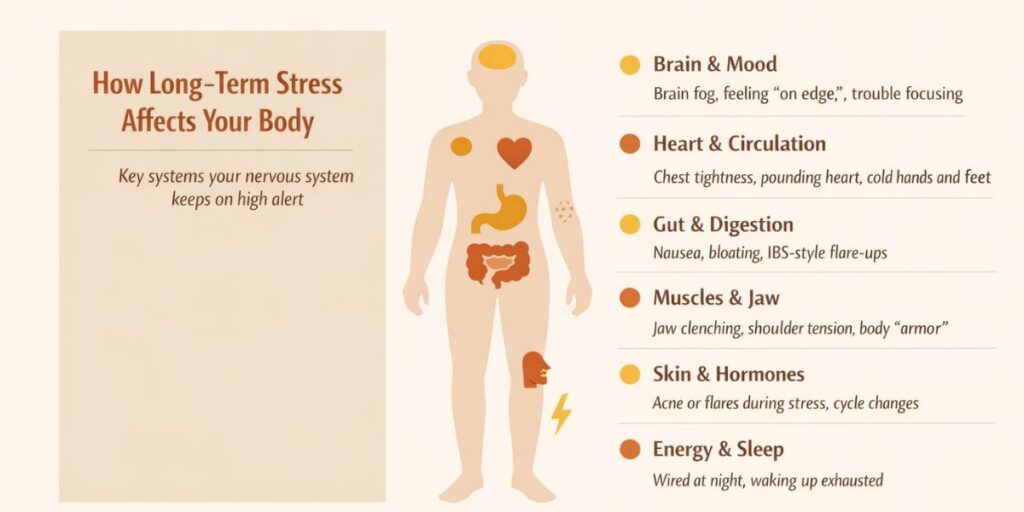
Your body can show very real symptoms – chest tightness, stomach drops, buzzing limbs, skin flares, brain fog, weird pains – long before anything gets labeled as a disease.
You’re not imagining it. You’re just catching the impact of long-term stress early, while it’s still living in systems and patterns instead of diagnoses.
This is exactly the window where working with the nervous system (not just your thoughts) can be powerful.
Quick Checklist: Signs Your Body’s Been Under Long-term Stress
Even if your labs look “fine,” your body might be quietly keeping score of long-term stress. Common patterns:
- Random gut issues – nausea, bloating, constipation/diarrhea swings
- Chest tightness, racing heart, or weird flushes
- Jaw clenching, neck and shoulder “armor”
- Skin flares or hair shedding after stressful seasons
- Brain fog, sensory overload, waking up exhausted
Long-Term Effects of Stress on the Body: The Weird, Specific Stuff
Let’s talk about what this actually looks like day to day.
These are the oddly specific, very real ways long term stress can live in the body. Not just “you feel anxious,” but the stuff you might think is random or personal failing, when it’s actually your nervous system adapting.
Your Gut and Digestion Go Off-Script
Long term stress can change how your nervous system runs digestion.
That can look like:
- Random nausea or stomach “drops” when nothing is wrong
- Constipation for days, then sudden urgency out of nowhere
- Bloating that doesn’t match what you ate
- IBS-style flares that seem to show up during stressful weeks
- Forgetting to eat all day, then eating everything at night
- Never being quite sure if you’re actually hungry or just running on adrenaline
When your body is constantly scanning for threat, digestion gets pushed down the priority list. Blood flow and energy get pulled toward survival tasks instead of calm, predictable digestion.
So no, you’re not “overreacting” to food. Your gut is reacting to your life.
Heart, Chest, and Circulation Feel “Off”
Long term stress also impacts how your cardiovascular system functions.
People describe things like:
- Sudden rushes of heart pounding, then nothing
- Chest tightness that feels like a band around your ribs
- Feeling weirdly breathless walking up a single flight of stairs
- Hands and feet that are constantly cold
- Random warm flushes or hot cheeks with no clear trigger
These sensations can be terrifying, especially when they show up “for no reason.”
Chronic stress is linked with higher blood pressure and increased wear-and-tear on the heart and blood vessels over time. Even when your numbers are technically “borderline” or “a little high for your age,” your body is still carrying that load.
Important: When to Call a Doctor, Not Just Blame Stress
New chest pain, strong pressure, trouble breathing, or sudden changes in vision always need urgent medical care – even if you’re “under a lot of stress.” It’s okay to let a doctor rule out anything serious first. If everything looks normal but your body still feels off, that’s when nervous-system work can really help.
Muscles, Jaw, and Posture Get Stuck in “Armor Mode”
Your body doesn’t just feel stress. It holds it.
Long term stress often shows up as:
- Jaw clenching at night that your dentist notices before you do
- Teeth grinding or tiny cracks from years of tension
- Shoulders that live up by your ears
- A subtle hunch: head forward, chest tight, ribs locked, pelvic floor clenching
- Random shaking in your legs or hands after you finally stop doing things
Think of it like your body putting on armor. Your muscles and posture start organizing around “something might happen,” even when you’re just sitting on the couch.
Skin, Hair, and Hormones Join In
Chronic stress can change inflammatory patterns and hormone signaling. It doesn’t just live in your mood.
Over time, stress can show up as:
- Acne or skin flares that hit during high-stress stretches
- Eczema or psoriasis that hang around longer than usual
- Rosacea that lights up your face when you’re under pressure
- Slower wound healing or breakouts that never fully calm down
- More hair in the shower drain a few months after a major stressor
- Menstrual cycles that become irregular, heavier, lighter, or skip altogether
Brain, Senses, and Energy Start Glitching
Long term stress doesn’t just affect how you feel emotionally. It changes how your brain and nervous system process information.
Common things people notice:
- Losing simple words mid-sentence
- Walking into a room and instantly forgetting why you’re there
- Feeling emotionally thin – like one more notification might make you cry
- Loud sounds feeling aggressive instead of neutral
- Overwhelm in grocery stores, open offices, or busy restaurants
- Waking up exhausted, like you’re hungover from sleep
Sleep might technically be happening, but deep repair isn’t. Your brain is busy scanning, even at night.
This is the part that often gets minimized as “just anxiety” or “just stress,” when it’s actually nervous system dysregulation.
If you’re reading this and thinking, “Okay, I think my whole system might be in this state,” I break down 11 signs your nervous system is dysregulated in more detail here.
Why these “random” symptoms actually make sense
If your body has been living with ongoing stress, it makes sense that digestion, sleep, hormones, and pain would adapt too. Your system has been prioritizing survival, not optimization. These symptoms can feel like you’re failing at coping, but they’re actually what a long-term stress response looks like in real life.
Always Speak With Your Primary Physician
Even though stress can cause very real body symptoms, you never want to assume stress is the only explanation without getting checked out.
It’s worth talking to a doctor if:
- You have new or worsening chest pain, pressure, or shortness of breath
- You faint, have severe dizziness, or sudden changes in vision or speech
- You notice big shifts in weight, appetite, or energy that don’t resolve
- Your cycle changes dramatically and stays that way
- Pain is waking you up at night or making it hard to function
From there, if tests are normal but your body still feels terrible, that’s usually the moment people end up in my office asking, “So…what now?”
If your version of long-term stress looks less like racing thoughts and more like going numb, zoning out, or feeling like you “shut down,” I walk through why you shut down under stress – and what actually helps in this post.
How Somatic Therapy Helps a Body That’s Been in Survival Mode
From a somatic lens, the long term effects of stress on the body aren’t random. They’re the imprint of how your nervous system has been trying to keep you safe.
Somatic therapy focuses on things like:
- Helping your body complete stress responses that got stuck. Check out this interview with Megan Call, Ph.D. about how to complete your body’s natural stress cycle.
- Noticing where your system tends to land (fight, flight, freeze, fawn)
- Teaching your body how to move between activation and rest more smoothly
- Working with posture, breath, micro-movements, and sensation – not just thoughts
If you’re recognizing yourself in these stress patterns and you’re in LA, this is exactly the kind of work we do together in somatic therapy in Los Angeles.
If you’re reading this and realizing, “Okay, this isn’t just stress, my whole body’s in it,” this is exactly the kind of work I do with clients. In my anxiety therapy practice, we look at the actual patterns your body is running – fight, flight, freeze, fawn – and start giving your nervous system different options.
What You Can Start Doing Now If Your Body Is Showing Stress Symptoms

Try this now: A 60-second Reset for a Stressed-Out Body
You don’t have to overhaul your life to start shifting your nervous system. Try this once a day:
- Plant your feet. Feel the floor under your heels, toes, and the edges of your feet.
- Drop your shoulders one inch. Not perfect posture – just a tiny soften.
- Name one sensation. “Tight.” “Warm.” “Heavy.” “Buzzing.”
1. Start Tracking Body Patterns, Not Just “Bad Days”
Instead of “today was stressful,” get curious about patterns.
Notice:
- When symptoms spike – mornings, nights, Sundays, after certain tasks or people
- Where you feel it first – chest, gut, jaw, head, skin
- What helps even a tiny bit – movement, quiet, music, warmth, cold, going outside
You’re not trying to solve it yet. You’re building a map of how your nervous system reacts, which is gold when you start somatic or anxiety work.
2. Add One Tiny Somatic Pause to a Habit You Already Have
Pick something you already do every day – brushing your teeth, making coffee, taking a shower, feeding your pet.
Attach a 30–60 second body check-in to it:
- Feel your feet on the floor
- Let your jaw un-clench and tongue rest from the roof of your mouth
- Let your shoulders drop and notice the weight of your arms
- Take one slightly slower exhale than usual
You’re teaching your system: “Yes, stress exists. But I also get moments of contact with my body, even on busy days.”
3. Reduce the Invisible Stress Inputs Where You Can
Your nervous system doesn’t only respond to big stressors. It also reacts to constant micro-surges.
Look at things like:
- Scrolling heavy news first thing in the morning
- Answering emails from bed or late at night
- Keeping every notification turned on
- Having zero boundaries between “work brain” and “rest brain”
You don’t have to become a monk. Even small shifts – like checking news once a day instead of ten times, or turning off push notifications for one app – can give your system small, meaningful breaks.
4. When You’re Ready, Get Support That Includes Your Body
If you’ve been living with the long term effects of stress on your body for years, you don’t have to untangle this alone.
Look for support that:
- Understands anxiety and the nervous system
- Talks about sensations, not just coping skills
- Validates your “weird” symptoms instead of minimizing them
FAQ: Long-Term Stress, Your Body, and Healing Your Nervous System
How long does it take to heal from chronic stress?
Healing from chronic stress is less about a fixed timeline and more about what’s changing in your life and body. Some people notice small shifts in a few weeks; deeper nervous system regulation usually builds over months. You’re looking for better sleep, fewer flare-ups, and more “neutral” days.
What are the side effects of prolonged stress?
Prolonged stress can affect nearly every system in the body. Common side effects include gut issues, chest tightness or palpitations, muscle tension, headaches, cycle changes, skin flares, sleep problems, fatigue, and feeling easily overwhelmed. Over time, long-term stress can increase the risk of high blood pressure, heart disease, anxiety, and depression.
How to reverse chronic stress?
You can’t erase every stressor, but you can reverse the chronic stress pattern by changing how your nervous system responds. That usually includes reducing unnecessary stress inputs, improving sleep and blood sugar, adding small somatic practices, supportive movement, and—when possible—working with a therapist who understands anxiety and the nervous system, not just coping skills.
About Cheryl Groskopf, LMFT, LPCC
I’m Cheryl Groskopf, a dual-licensed therapist (LMFT, LPCC) and nervous-system-focused anxiety and trauma therapist in Los Angeles. I specialize in working with high-functioning people pleasers, adult children of emotionally immature or narcissistic parents, and adults who feel like their body is “always on edge” even when life looks fine on paper.
My work integrates somatic therapy, attachment repair, and parts work with clear, practical psychoeducation. I’ve been featured as a mental health expert in outlets like TIME, HuffPost, Verywell Mind, and Reader’s Digest, and I run a private practice, Evolution to Healing Psychotherapy, based in Los Angeles.


